Preloader

Types of Electrical Cables Used in Dubai Construction Projects

Types of Electrical Cables Used in Dubai Construction Projects

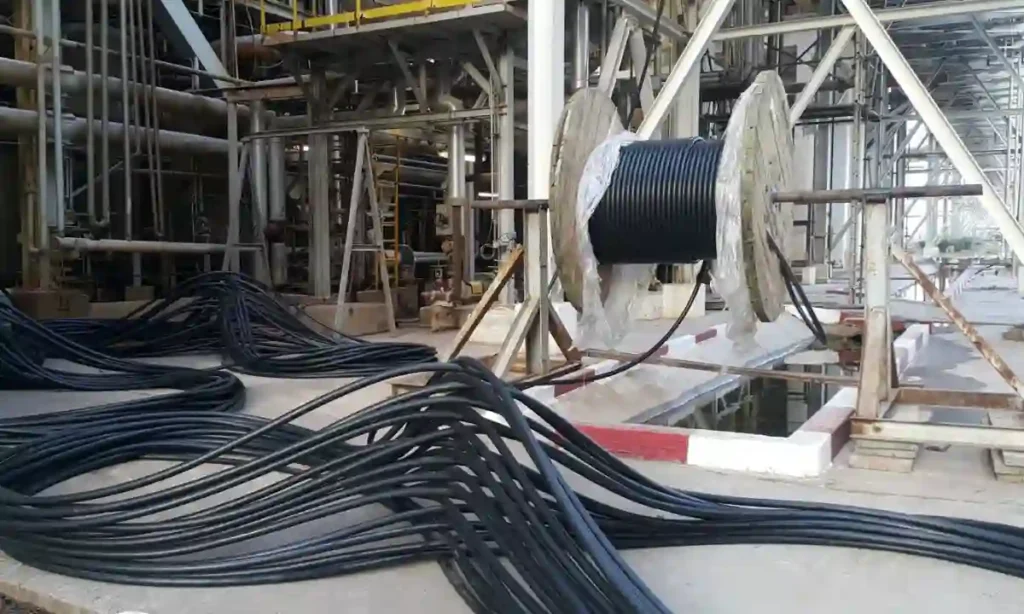
Choosing the right electrical cables in Dubai construction is not a later decision. It shapes the safety, compliance, and performance of an entire building. From residential towers to large-scale infrastructure, the cables running through walls, risers, and underground conduits determine whether a project meets regulatory requirements and stands the test of time. Here is a breakdown of the types you will find on site.

electrical cables in Dubai construction

Electrical Cables in Dubai Construction: Common Types

PVC Insulated Cables

PVC insulated cables UAE contractors specify most frequently for general internal wiring across residential, commercial, and light industrial projects. They are cost-effective, flexible, and available in a wide range of conductor sizes. They remain the backbone of standard electrical cables in Dubai construction across most building types.

Fire Resistant Cables

Fire resistant cables Dubai buildings must incorporate are non-negotiable in stairwells, escape routes, emergency lighting, and fire alarm systems. Dubai Civil Defence regulations require these cables to maintain circuit integrity during a fire for a defined period, ensuring evacuation systems continue to function when needed. Specifying the wrong cable in these areas is a compliance failure, not just a technical one.

XLPE Cables

Cross-linked polyethylene cables handle high-voltage distribution across large commercial developments, hospitals, and infrastructure projects. They offer superior thermal performance compared to PVC, making them the preferred choice where load demands are high and operating temperatures are elevated. They are common in main distribution boards and substation connections on major Dubai builds.

Armoured Cables

Where cables run underground, outdoors, or through areas exposed to mechanical stress, armoured cables provide the protection needed. Steel wire armouring helps protect the conductor against physical damage, moisture exposure, and compression, ensuring greater durability in demanding environments.  They are widely used in site distribution, external lighting, and plant room connections across Dubai builds of all scales.

Power Cables for High-Rise Buildings

Power cables for high-rise buildings Dubai developers specify must handle vertical distribution across dozens of floors under sustained load. These cables manage voltage drop, heat dissipation, and mechanical stress from their own weight as they run up risers. Getting this specification wrong in a high-rise is costly to fix and potentially dangerous to ignore.

Cable Type Comparison — XLPE, PVC, LSZH & Armoured

Selecting the right cable type for a Dubai construction project depends on the application, load requirement, and regulatory specification. Here is how the most commonly used cable types differ in practice:

  • PVC Insulated Cables: Used for general internal wiring across residential, commercial, and light industrial buildings. Compliant with BS 6004 and IEC 60227, PVC cables are the standard choice for circuits where fire resistance and mechanical protection are not the primary requirement.
  • XLPE Cables: Specified for high-voltage power distribution across large commercial towers, hospitals, and infrastructure projects. XLPE cables handle higher operating temperatures and sustained loads better than PVC, making them the preferred choice for main distribution boards and substation connections.
  • LSZH Cables: Mandatory in stairwells, escape routes, corridors, public areas, and any space where occupant safety during a fire is a priority. LSZH cables produce minimal smoke and no halogen gases when exposed to heat, complying with BS EN 50525-3-11 and Dubai Civil Defence fire safety requirements.
  • Armoured Cables (SWA): Used where cables run underground, outdoors, or through areas exposed to mechanical stress. Steel wire armouring protects against compression, moisture, and physical damage, making these cables the standard for plant room connections, external distribution, and underground feeds.
  • Fire Resistant Cables: Non-negotiable for emergency lighting, fire alarm systems, and evacuation circuits. Compliant with BS 7846 and IEC 60331, these cables maintain circuit integrity during a fire, ensuring life safety systems remain operational when they are needed most.

Compliance and Standards That Drive Cable Selection

Electrical cable selection in Dubai construction must satisfy both British Standards and IEC specifications as referenced in UAE authority requirements:

  • BS 6004: PVC insulated cables for general wiring in residential and commercial buildings
  • BS 5467 / IEC 60502: XLPE and PVC insulated armoured cables for power distribution
  • BS 7846 / IEC 60331: Fire-resistant cables for emergency circuit integrity
  • BS EN 50525-3-11: LSZH cables for areas requiring low smoke emission
  • IEC 60227: General PVC insulated cable specifications for voltages up to 450/750V

All cables used on Dubai construction projects must carry verified test certificates confirming compliance with the relevant BS or IEC standard. Non-compliant cables are rejected at the inspection stage regardless of brand or cost.

Compliance and Standards That Drive Cable Selection

Cable requirements differ significantly between commercial and industrial projects in Dubai. Selecting the wrong specification is one of the most common causes of failed electrical inspections.

Commercial Buildings — Offices, Retail, Hotels:

  • General wiring: PVC insulated cables (BS 6004)
  • Escape routes and fire alarm circuits: Fire-resistant and LSZH cables mandatory
  • Main distribution risers: XLPE armoured cables for vertical runs across multiple floors
  • Load requirement: Calculated per total floor area, tenant density, and HVAC load

Industrial Buildings — Warehouses, Factories, Logistics:

  • Power feeds: XLPE or armoured SWA cables for high-load machinery connections
  • Underground runs to plant rooms: Double-armoured cables with moisture-resistant sheathing
  • Hazardous area wiring: Specialist cable types with additional mechanical and thermal protection
  • Load requirement: Calculated per connected machinery load plus 20–25% future capacity allowance

Working with a licensed electrical contractor in Dubai ensures cable specifications are matched to project type, load calculations, and UAE authority requirements before procurement begins.

FAQs

PVC insulated cables (BS 6004) are standard for general wiring. LSZH and fire resistant cables are mandatory in escape routes and public areas. XLPE armoured cables are used for main distribution risers and high-load circuits. All cables must comply with the relevant BS or IEC standard and carry valid test certificates.

XLPE (cross-linked polyethylene) cables are selected for high-voltage distribution and heavy load applications due to their superior thermal performance. LSZH (low smoke zero halogen) cables are specified for enclosed public spaces stairwells, corridors, tunnels where smoke toxicity during a fire is a life safety risk. The two serve different purposes and are often used together on the same project.

Cable sizing is calculated based on total connected load, voltage drop limits, fault current rating, and ambient temperature. In Dubai's climate, derating factors for high ambient temperatures must be applied. An experienced electrical contractor calculates cable sizes against the full load schedule before procurement to ensure compliance with UAE authority inspection requirements.

Summing Up

Every metre of cable in a building carries a decision. Electrical cables in Dubai construction must be selected with compliance, performance, and longevity in mind, not just cost or availability. For electrical installation in Dubai that gets the specification right at every stage, Texon Electromechanical LLC delivers the expertise complex projects demand. The right cable, in the right place, to the right standard.

Need Help?