Building a commercial property? Then you’ll soon have to choose between pressure pipes vs drainage pipes in Dubai. They look almost the same on the outside, but they serve different purposes. One handles water under pressure. The other lets wastewater flow out, mostly by gravity. Get the wrong one, and you’ll spend more to fix it later. Here’s the difference between pressure pipes and drainage pipes. Read it, and your choice for the project gets easier.
What Is a Pressure Pipe?
Pressure pipes carry liquids, so they must withstand internal pressure. It might come from the water supply network, a pump, or some other system. Whichever it is, your pipe should be strong enough for the pressure it will face. If it isn’t, it leaks. Or it fails.
In commercial buildings, pressure pipes are commonly used for:
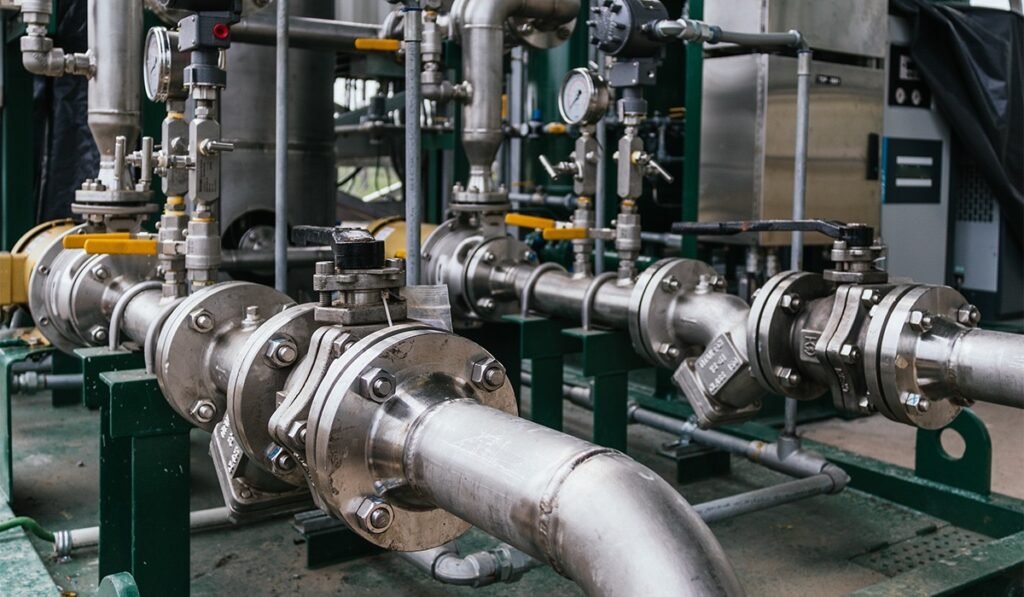
Drainage pipes take used water out of your building. This includes rainwater, wastewater, and sewage. Most systems don’t use a pump. They use gravity, so the pipes are laid at a slight slope and the water flows towards the outlet. That’s why plumbing contractors in Dubai install them at the right slope. If the slope is wrong, the water can get stuck in the pipe.
Drainage pipes are used in places like these:
Here’s a quick look at the difference between pressure pipes vs drainage pipes, so you can compare them side by side.
| Comparison point | Pressure Pipes | Drainage Pipes |
|---|---|---|
|
Main purpose Flow method Pipe design Installation Common materials Typical applications |
Carry fluids under pressure Pressure from a supply network or pump Rated to withstand specified internal pressure Must suit pressure requirements and system layout Pressure-rated PVC, HDPE, copper and steel Water supply and pumped systems |
Remove wastewater and rainwater Usually gravity-based Designed for drainage and applicable external loads Usually needs a suitable slope for gravity flow PVC, HDPE and other approved drainage materials Sewage, wastewater and stormwater removal |
Choosing between pressure pipes vs drainage pipes in Dubai for a commercial project? Check these before you order any materials:
If you’re buying pipes, don’t go only by price and looks. The real problems show up later, after it’s already fitted. So watch out for these.
The slope is the big one, because gravity moves the water. Then there's how the pipes will be joined, whether you can reach them later for repairs, and how much space you have.
Gravity moves the water in most building drainage systems. So the pipes go in at a suitable slope. It helps the water head towards the outlet.
Yes. Look at the plumbing standards that apply to your project. The pipes and fittings should meet them. If you're unsure, your engineer or contractor can help.
Pressure pipes and drainage pipes may look the same, but you can’t use them for the same job. One carries fluids under pressure. The other takes wastewater out, and it uses gravity to do that. Your commercial building may need one type or the other. Which one you need depends on what your system is for. And how it will run. Then there are the project rules. Read the manufacturer’s specifications before you order anything. Talk to your engineer or contractor too, and tell them your plan.
Need support with the mechanical and plumbing needs of your building? You can contact Texon Electromechanical LLC.

Texon Electromechanical LLC is a MEP contracting company in Dubai delivering HVAC, electrical, plumbing, commercial and residential maintenance services across the city with reliable and compliant execution.
Garhoud community - 412 - Al Garhoud - Dubai
Copyright © 2026 All Rights Reserved By Texon