If you’re comparing VRF vs VRV systems for a villa, office, hotel, or retail space, here is the short answer: VRV is Daikin’s brand name for a VRF system. The technology behind both is the same. The real decision is which brand and configuration suit your building, not which technology is better.
This guide explains where the terms come from, how the systems work, what actually differs between brands, and what to consider before choosing one in Dubai.
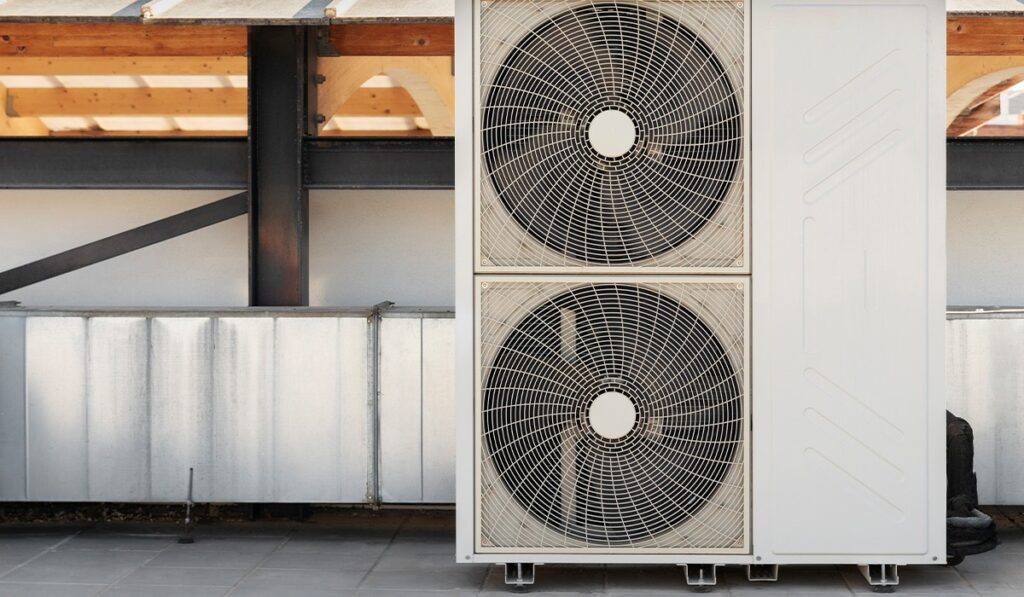
VRF stands for Variable Refrigerant Flow. It is the general industry term for an air conditioning system where one outdoor unit serves multiple indoor units, and the amount of refrigerant sent to each indoor unit is varied to match its cooling demand.
Instead of switching on and off like a traditional system, the compressor adjusts its speed. This lets the system respond to different loads in different rooms at the same time.
VRV stands for Variable Refrigerant Volume. Daikin introduced the term and holds it as a trademark. Daikin was an early developer of this technology, which is why “VRV” is common in conversation, especially in the Middle East.
So when someone searches for a “VRV HVAC system Dubai,” they are usually looking for a VRF system, either from Daikin or from another brand.
The difference between VRF and VRV is mostly one of naming:
It’s similar to how “Jacuzzi” is a brand but people use it for any whirlpool bath. Other manufacturers use their own names or simply say VRF.
A typical system has three main parts:
The system continuously monitors demand. If a meeting room is full and a nearby office is empty, the compressor delivers more refrigerant to the busy room and less to the empty one. This is why these systems can offer precise zone control.
Both VRF and VRV come in two main configurations.
All connected indoor units operate in the same mode at the same time, either cooling or heating. These suit buildings where every zone needs the same thing, which in Dubai is mostly cooling.
Some indoor units can cool while others heat simultaneously. Heat removed from one area can be reused elsewhere. These suit buildings with varied needs, such as hotels or mixed-use developments.
A VRF system for commercial buildings is often considered when you need flexible zoning across many rooms. Common uses include:
VRF can also suit buildings where ductwork space is limited, since refrigerant pipes are much smaller than large air ducts.
Many Dubai projects also consider chilled water systems. In general:
The right choice depends on building size, load profile, and long-term maintenance plans. Your MEP consultant can model both.
Pricing varies widely, so any single number would be misleading. Instead, here are the factors that determine the VRF system installation cost in Dubai:
Ask for a detailed quotation that separates equipment, installation, controls, and commissioning so you can compare offers fairly.
Rather than choosing between the two terms, compare specific products:
Yes, in principle. VRV is Daikin's trademarked name for its VRF technology.
Neither is inherently better, since VRV is a type of VRF. Compare specific models on efficiency, features, support, and cost.
Lifespan depends on the equipment, operating conditions, and maintenance quality. Check the manufacturer's guidance and warranty terms.
VRF vs VRV systems is mostly a question of terminology: VRV is Daikin’s brand name for VRF technology. What matters is choosing the right capacity, configuration, brand and installer for your building and Dubai’s climate. For expert advice on HVAC design, installation and maintenance, contact Texon Electromechanical LLC, a trusted MEP contracting company in Dubai, and explore our HVAC services.

Texon Electromechanical LLC is a MEP contracting company in Dubai delivering HVAC, electrical, plumbing, commercial and residential maintenance services across the city with reliable and compliant execution.
Garhoud community - 412 - Al Garhoud - Dubai
Copyright © 2026 All Rights Reserved By Texon