Choosing electrical cables for a building in Dubai? You’ve likely seen the XLPE vs PVC cables Dubai comparison. Both are insulation- the plastic coating around the wire. They keep the current inside and keep people safe. XLPE copes better with heat. PVC is cheaper and is fine for lighter work. So, which cable do you need? In this article, we’ll go through how XLPE and PVC differ, so you can pick the right one with confidence. Read on, and we’ll help you decide.
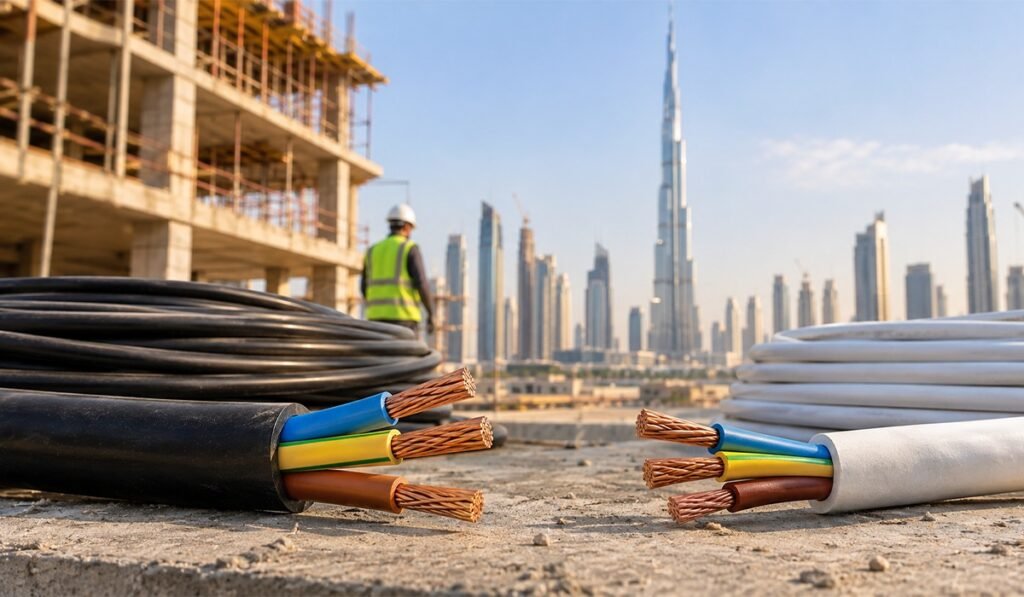
XLPE stands for cross-linked polyethylene. It’s the plastic layer around the wire inside a cable, and it keeps the current from escaping. The plastic is treated while the cable is being made, so heat doesn’t damage it easily.
You’ll see XLPE cable Dubai projects in commercial buildings, factories, and power distribution systems.
Key characteristics of XLPE cables:
If your building uses a lot of power, it’s usually among the best cables for commercial buildings in Dubai.
PVC stands for polyvinyl chloride. It’s a very common plastic coating around the wire in a cable. It keeps the wire safe from electrical contact, moisture, and some harsh conditions.
You’ll see PVC insulated cable UAE installations a lot in building wiring, lighting circuits, and control systems.
Key characteristics of PVC cables:
Before choosing, compare the main properties of XLPE vs PVC cables in Dubai.
| Comparison Point | XLPE Cables | PVC Cables |
|---|---|---|
|
Full Form Normal Operating Temperature Heat Resistance Current-Carrying Capacity Flexibility Cost Common Applications |
Cross-linked Polyethylene Typically 90°C Higher Can be higher under comparable conditions Can be stiffer, depending on cable design Usually higher Power distribution and higher-load installations |
Polyvinyl Chloride Typically 70°C Lower Generally lower under comparable conditions Flexible options are widely available Usually more economical General building wiring and control circuits |
The right choice in XLPE vs PVC cables Dubai depends on your building and how much power it needs.
XLPE is usually a good fit for:
PVC is usually a good fit for:
Before you pick either one, check Dubai’s electrical rules. DEWA regulations cover both PVC- and XLPE-insulated copper cables for fixed wiring, where they apply. The Dubai Building Code also has its own rules on cable selection. So confirm the latest requirements and your project specifications with electrical contractors in Dubai before you buy.
Before you order, go through this LV cable selection UAE checklist:
Related blog : https://texon.ae/electrical-wiring-standards-dubai-shopping-malls/
Mostly because it copes better with heat. The final price also changes with the cable size, the voltage rating, and how it's built.
Yes, for the right jobs. The cable has to match the electrical rating your project needs, and it has to meet Dubai's rules. So check your project specifications before anything goes in.
It depends on how much power you'll use, how the cable is installed, how long the run is, the voltage drop, and how hot it gets around the cable. Ask a qualified electrical engineer to work it out for you.
XLPE and PVC cables both have their place. XLPE can take more heat. PVC is a good choice for a lot of everyday wiring. Which one suits your Dubai building? It depends on a few things. How much power do you need? Where will the cables go, and how will they be fitted? What are your safety needs, and what do the local rules say? Your electrical engineer or contractor can help you work that out, so ask them first. And before you buy, look at what the manufacturer says about the cable. Still not sure which one to go for? Texon Electromechanical LLC can help you sort it out.

Texon Electromechanical LLC is a MEP contracting company in Dubai delivering HVAC, electrical, plumbing, commercial and residential maintenance services across the city with reliable and compliant execution.
Garhoud community - 412 - Al Garhoud - Dubai
Copyright © 2026 All Rights Reserved By Texon