Choosing underground drainage fittings in Dubai means more than matching pipe sizes. The wrong material or ring stiffness, or a poor joint, can lead to blockages, leaks, and costly excavation later. Dubai’s high temperatures, saline soils, and often high groundwater make these choices more important than they would be elsewhere.
This guide covers the main fitting types, the specifications to check, where each is used, and what to consider before you buy or specify.
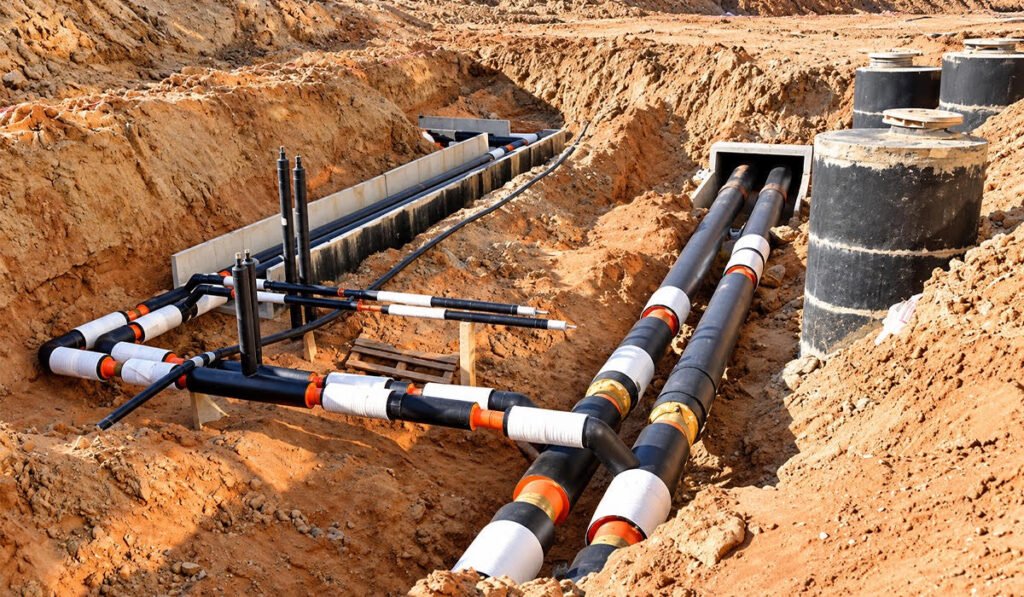
Underground drainage fittings are the components that connect, redirect, reduce, or provide access to buried drainage pipes. They let a drainage run change direction, join branches, change size, and be inspected and cleaned.
A typical underground drainage system in the UAE carries foul water (sewage), storm water, or both. Fittings are installed along the pipe run, at junctions, and at changes in level or direction.
Material choice affects durability, installation speed, and performance in aggressive ground.
Lightweight, corrosion-resistant, and widely used for gravity drainage in residential and commercial projects. It is usually joined with rubber ring seals.
Flexible and resistant to many chemicals. It is often chosen where ground movement or aggressive conditions are a concern. Joints may be fused or mechanical, depending on the system.
Strong and suited to heavy loads or specific fire and acoustic requirements. In saline or aggressive soils, they typically need protective coatings, and corrosion risk should be assessed.
Used mainly for larger-diameter infrastructure and stormwater lines rather than typical building drainage.
For most buildings, uPVC or HDPE is common. The final choice should follow the project specification and the consultant’s design.
When reviewing drainage pipe fittings specifications, confirm these points rather than relying on the product name alone:
If any specification is unclear, ask the supplier for the technical datasheet before ordering.
Different projects use drainage fittings applications in different ways:
Local conditions deserve attention at the design stage:
Good fittings can still fail if installation is poor. Key practices include:
Look for a supplier that can provide:
Sharing your drawings or bill of quantities with the supplier helps avoid ordering mismatches.
They connect, redirect, join, and provide access to buried drainage pipes carrying sewage or storm water.
It depends on the project. uPVC and HDPE are common choices because they resist corrosion. Your consultant will specify the right one based on load, ground conditions, and the type of effluent.
Routine inspection and cleaning depend on the building type. Restaurants and high-use buildings usually need more frequent checks than residential properties.
The right underground drainage fittings in Dubai come down to matching material, ring stiffness, joint type, and standards to your project’s loads and soil conditions. Installation quality and testing matter as much as the product itself.

Texon Electromechanical LLC is a MEP contracting company in Dubai delivering HVAC, electrical, plumbing, commercial and residential maintenance services across the city with reliable and compliant execution.
Garhoud community - 412 - Al Garhoud - Dubai
Copyright © 2026 All Rights Reserved By Texon